Don Quixote's Origin: How Cervantes Wrote a Classic in Prison
The tale of Don Quixote, the whimsical knight-errant who tilted at windmills and championed impossible dreams, is a cornerstone of global literature. What many readers may not realize, however, is the profoundly ironic origin of this masterpiece. Miguel de Cervantes Saavedra, the celebrated **Schrijver Van Don Quichot** (author of Don Quixote), conceived and began writing his epic novel not in a serene study, but within the confines of a Spanish prison cell. This remarkable circumstance adds another layer of depth to a story already rich with themes of idealism, reality, and the human spirit's indomitable will.
Cervantes's life was a tapestry woven with adventure, hardship, and a relentless pursuit of literary recognition. Far from the image of a detached academic, he was a soldier, a captive, a failed businessman, and ultimately, a genius who transformed his personal struggles into universal art. Understanding his tumultuous biography is key to appreciating how _Don Quixote_, a novel often seen as an ode to freedom and imagination, could have been born from the strictures of incarceration.
The Formative Years of a Literary Giant
Miguel de Cervantes Saavedra entered the world on September 29, 1547, in Alcalá de Henares, near Madrid. He was the fourth of seven children born to Rodrigo de Cervantes, a deaf surgeon struggling with a meager income, and Leonor de Cortinas, a woman of higher social standing and, unusually for her time, educated enough to read and write. This disparity in parental backgrounds, coupled with persistent financial difficulties, meant a childhood marked by frequent relocations and a constant awareness of social and economic precariousness. These early experiences undoubtedly instilled in young Miguel a keen observation of class differences, the burdens of debt, and the often-harsh realities of life – themes that would later resonate deeply in his magnum opus.
While details of his formal education remain debated (some scholars suggest Jesuit schooling, others dispute it, with many believing he never attended university), it's clear that Cervantes developed an insatiable appetite for reading. This self-cultivated intellectual curiosity was a defining characteristic. Around 1569, his first known poem appeared, published by the humanist Juan López de Hoyos, whom many consider to be Cervantes's mentor. De Hoyos’s admiration for the Dutch humanist Desiderius Erasmus is believed to have influenced Cervantes, fostering a critical yet empathetic worldview that would later permeate his narratives. This blend of learnedness and lived experience laid the groundwork for the extraordinary literary voice that would define the **Schrijver Van Don Quichot**.
From Battlefield Hero to Captive Slave: Cervantes's Tumultuous Life
Cervantes's early adulthood was anything but sedentary. In 1570, he enlisted in the Spanish army stationed in Naples, Italy. His military career saw him participate in one of history's most pivotal naval encounters: the Battle of Lepanto in 1571. Aboard the galley _La Marquesa_, Cervantes fought with extraordinary courage, sustaining injuries that included a bullet wound to his left hand (permanently maiming it) and two chest wounds. He also nearly succumbed to a fever, yet his bravery on that day earned him lasting commendation. This period of his life, filled with valor and physical suffering, profoundly shaped his understanding of heroism, loyalty, and the grim realities of war. For a deeper dive into this adventurous phase, consider reading
Miguel de Cervantes: From Soldier to Don Quixote's Creator.
However, his journey home in 1575 took a drastic turn when his ship was intercepted by Turkish corsairs. Cervantes was captured and subsequently endured five years of harsh slavery in Algiers. During his captivity, he made several daring but ultimately unsuccessful attempts to escape, demonstrating an unyielding spirit and resourcefulness in the face of immense adversity. It was only in 1580 that his family, through tireless efforts and considerable expense, managed to ransom him, allowing him to return to Spain. The psychological impact of these years – the loss of freedom, the constant threat, the observation of human cruelty and resilience – must have been immense, providing a rich, albeit painful, wellspring of experience for his later writings. These experiences of captivity, combined with his earlier military service, gave him a unique perspective on the world, a blend of idealism and stark realism that few authors could match.
The Seeds of Genius: Financial Woes and Imprisonment
Upon his return to Spain at the age of 35, Cervantes found himself facing a new set of challenges. He resumed his literary activities but struggled to achieve significant success. His first full-length novel, _La Galatea_, a pastoral romance published in 1585, received a lukewarm reception. He also tried his hand at playwriting, attempting to find fortune in the burgeoning theatre world, but this too ended in disappointment. To support himself and his family, Cervantes took on various administrative roles, including serving as a commissary for the Spanish Armada, collecting provisions. These royal missions, however, were often plagued by inefficiency and corruption, leading to further financial woes and, crucially, repeated clashes with the law.
It was these recurring financial problems and his involvement in questionable transactions that led to his incarceration multiple times. One particular instance, in Seville in 1597, saw him imprisoned for unpaid debts and alleged irregularities in his accounts as a tax collector. It was within the gloomy walls of this Seville prison that the idea for _Don Quixote_ is widely believed to have taken root.
The Birth of an Immortal Character
Imagine the scene: confined, stripped of most earthly possessions, and burdened by societal failure, Cervantes found freedom in his imagination. The very act of imprisonment, which might have crushed a lesser spirit, instead provided the unique crucible for creativity. It forced him into introspection, offering a stark contrast to his earlier adventurous life. With perhaps only a quill and paper (or access to them), Cervantes began to craft a tale that would satirize the chivalric romances popular at the time, yet simultaneously celebrate the enduring power of idealism in a cynical world.
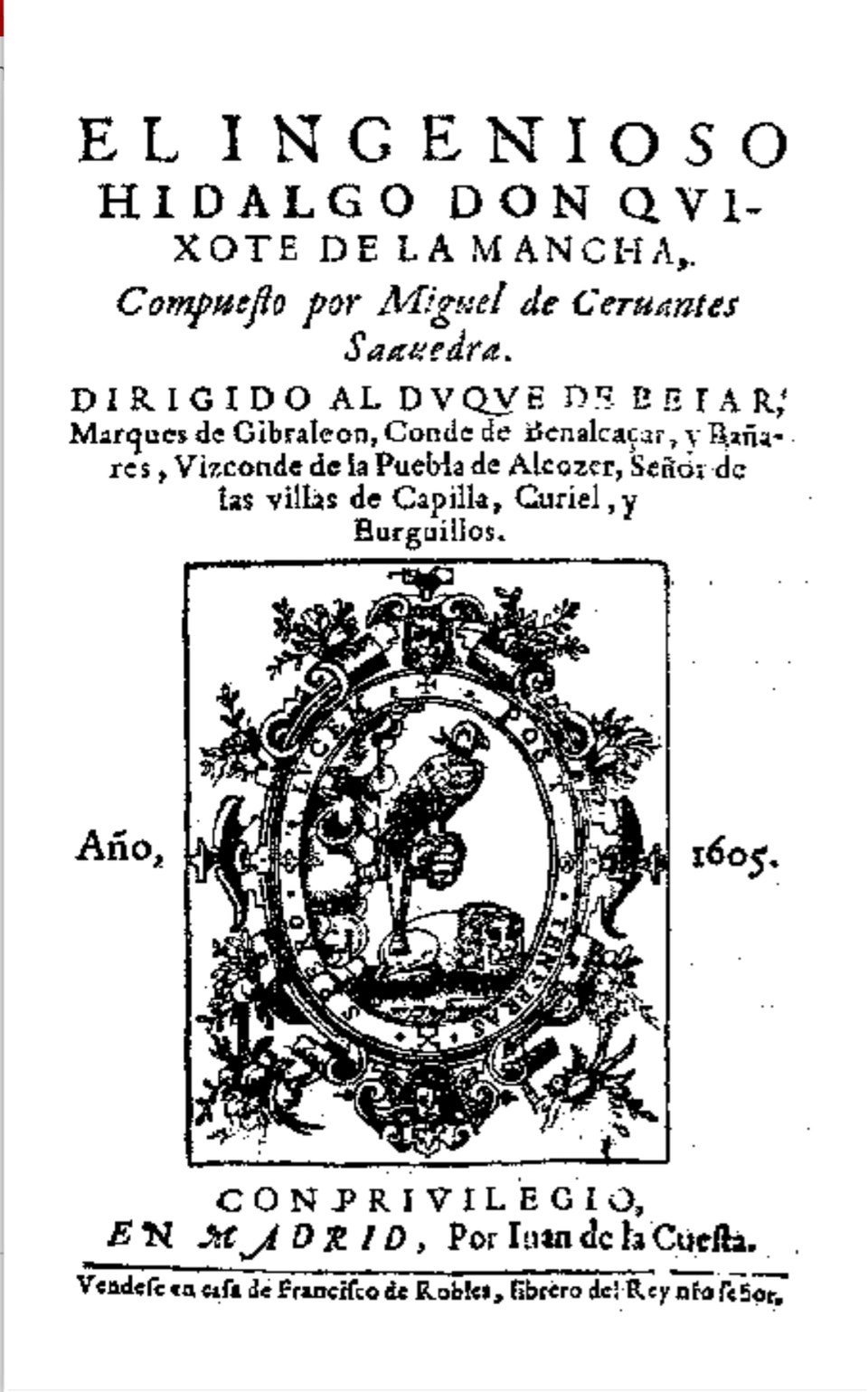
His own experiences—from the battlefield to the slave market, from the poverty of his youth to the disappointments of his adult career—infused the narrative. The idealist Don Quixote, seeing giants where there were only windmills, battling imaginary foes with unwavering conviction, was perhaps a mirror of Cervantes's own unwavering spirit amidst his personal adversities. Sancho Panza, the pragmatic squire, represented the grounding reality that Cervantes had encountered repeatedly. The first part of _El Ingenioso Hidalgo Don Quixote de la Mancha_ (The Ingenious Gentleman Don Quixote of La Mancha) was published in 1605, an instant success that captivated readers across Spain and beyond. The second part followed a decade later, in 1615, completing a narrative that would forever change the landscape of literature.
Legacy and Lasting Impact
The fact that _Don Quixote_ was conceived and begun in a prison cell adds a poignant layer to its enduring legacy. It stands as a testament to the resilience of the human spirit and the transformative power of art. Cervantes, the **Schrijver Van Don Quichot**, demonstrated that even in the most restrictive environments, imagination can soar, and profound truths can be unearthed. His novel is not merely a funny adventure; it's a deep philosophical inquiry into reality versus illusion, sanity versus madness, and the courage required to live by one's ideals.
For aspiring writers, Cervantes’s story offers an invaluable lesson: inspiration can be found in the most unlikely and challenging circumstances. Adversity, rather than stifling creativity, can often be its most potent catalyst, forcing a unique perspective and a deeper understanding of the human condition. For readers, approaching _Don Quixote_ with an awareness of Cervantes's difficult life enriches the experience, illuminating the profound personal journey that underpins the epic. To learn more about the man behind the myth, including the eventual discovery of his remains, you might find
Unearthing Cervantes: The Life and Burial of Don Quixote's Author an insightful read.
In conclusion, Miguel de Cervantes's journey from soldier to slave, from struggling writer to an incarcerated debtor, ultimately forged the unique perspective necessary to create _Don Quixote_. His time in a Seville prison, a period of forced introspection and isolation, became the unlikely birthplace of one of the world's most beloved and influential novels. It is a powerful reminder that genius often flourishes in unexpected places, and that true freedom, particularly the freedom of imagination, can thrive even behind bars. The story of the **Schrijver Van Don Quichot** is a testament to the fact that adversity, when met with an indomitable spirit, can indeed pave the way for an immortal legacy.